Where Listening Becomes How Leadership Works

Turning Listening into a Strategic Leadership Advantage

A disciplined system for aligning leaders around what matters most -

and acting on it together.

Book cover titled 'The Leaky Leadership Bucket: How Strategic Listening Can Fix the Leaks' depicting a metal bucket with water dripping from it, set against a dark background with orange light streaks.

Free Strategic Listening eBook

A practical introduction to the Strategic Listening System

Inside the eBook:

  • Why listening failures create costly performance leaks

  • How strategic listening changes the trajectory of leadership and culture

  • Key questions to help leaders uncover blind spots and take meaningful action

What is Strategic Listening?

The disciplined practice of listening with intention and structure to:

πŸ”΅β€ ‍Understand complex and difficult organizational challenges

πŸ”΅ Align people around what matters most

πŸ”΅ Act with coordination and effectiveness

Why Strategic Listening Matters?

Organizations don’t fall behind because leaders aren’t working hard.

They fall behind because critical signals are missed, misunderstood, or not acted on.

As a result, challenges begin to surface:

βœ… Misaligned priorities across teams

βœ… Employees who disengage because their input does not lead to action

βœ… Change initiatives that stall or lose momentum

βœ… Meetings that consume time but fail to produce clear outcomes

βœ… Cultures where people stop speaking up

These challenges often appear unrelated.

But they frequently share the same root cause:

The organization lacks a strategic listening system.

What is the Strategic Listening System?

Where Listening Becomes How Leadership Works

The Strategic Listening System is a distinct leadership operating system that embeds Dynamic Listening into how organizations develop leaders, align teams, and execute work.

Rather than treating listening as a skill or a communication technique, the system is designed to shape how leadership happens every day. It creates the conditions for leaders to understand what is real, align people around what matters, and act with clarity and confidence.

At the center of the system is Dynamic Listening, operationalized through the SIER* model: Sense, Interpret, Evaluate, Respond, and Remember. This makes listening visible, teachable, and repeatable in real leadership situations.

A System That Drives Performance

The Strategic Listening System is built on three interconnected elements that work together to shape performance:

πŸ”΅ Talent

Listening capability is developed in the work itself. Leaders build listening through real decisions, conversations, and challenges, with feedback tied directly to outcomes.

πŸ”΅ Team

Listening becomes a shared standard. Teams hold one another accountable for how listening happens, creating alignment, clarity, and stronger decision-making.

πŸ”΅ Routine

Listening is embedded in the moments that matter. Meetings, decisions, and reviews are intentionally structured to surface understanding and improve results.

These three elements are not separate. They operate together as a system that continuously strengthens how the organization learns, aligns, and executes.

System Architecture

The Strategic Listening System is supported by a set of core structures that make listening practical, measurable, and sustainable:

πŸ”΅ Strategic Listening Levels

Define the progression from inconsistent listening to fully integrated listening leadership

πŸ”΅ Listening Organization Factors

Create the conditions that support listening across the organization

πŸ”΅ Maximum Impact Meetings

Embed listening into how work is conducted every day

πŸ”΅ Personal Accountability Commitment (PAC)

Ensure that insight leads to action and sustained follow-through

A Continuous Cycle of Improvement

As the system is applied, it creates a reinforcing cycle:

Listen β†’ Learn β†’ Align β†’ Act β†’ Improve

Each cycle strengthens the next. Leaders gain clearer insight. Teams align more effectively. Decisions improve. Execution becomes more consistent.

The result is not more communication. It is better leadership.

What are the benefits of Strategic Listening?

Strategic Listening:

πŸ”΅ gives leaders a disciplined way to see what’s really happening, confront what holds them back, and take wise action.

πŸ”΅ strengthens relationships

πŸ”΅ sharpens decisions,

πŸ”΅ accelerates progress on the results that matter most.

πŸ”΅ builds trust and credibility across the organization

πŸ”΅ surfaces critical signals early before they become costly problems

πŸ”΅ aligns teams around what truly matters

πŸ”΅ increases engagement by ensuring people feel heard and valued

πŸ”΅ strengthens accountability for results

πŸ”΅ improves the quality and effectiveness of conversations and meetings

πŸ”΅ reduces costly misalignment and rework

πŸ”΅ helps leaders navigate complex and adaptive challenges with greater clarity

πŸ”΅ creates a culture where people speak up rather than stay silent

Are your leaders aligned around what matters most?

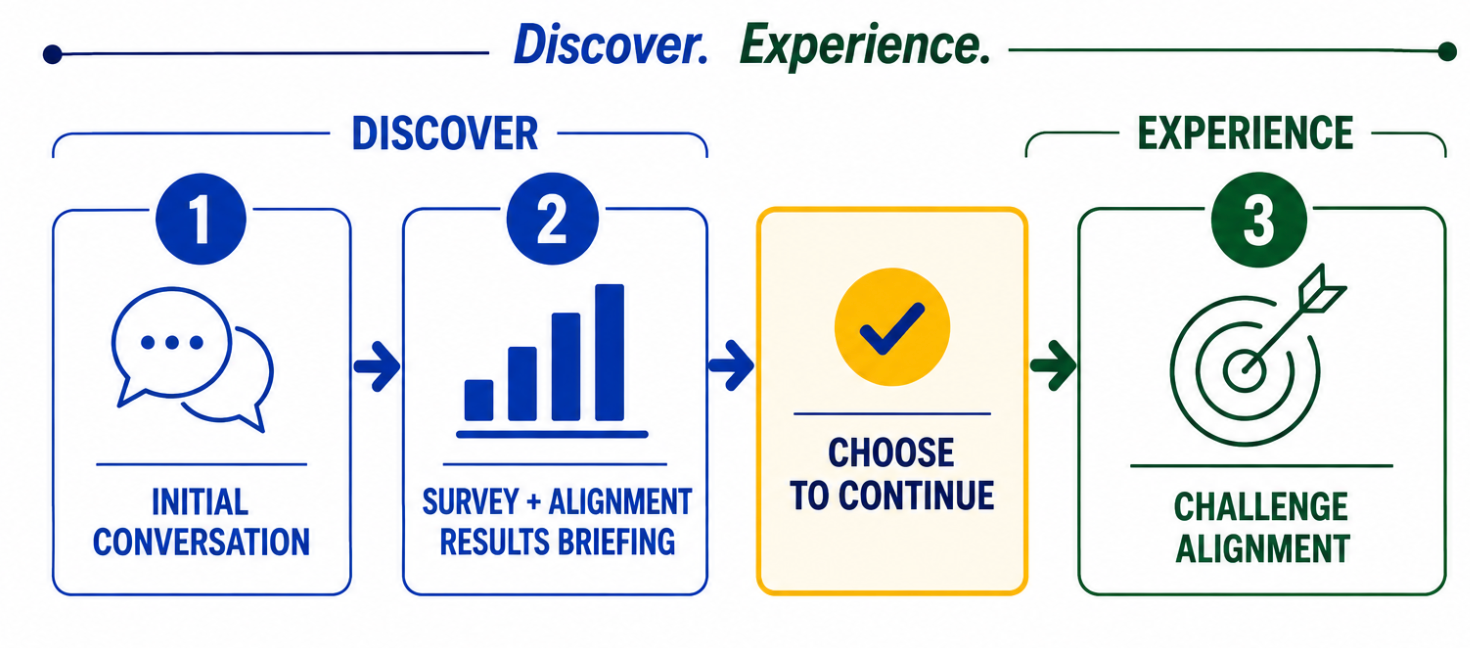
The SLEA and Leadership Briefing are offered at no cost and provide leadership teams with a clear diagnosis of how listening is functioning, along with focused insight into where attention can strengthen performance.

Leadership teams leave with a clear diagnosis of how listening is functioning across the leadership team and the organization, and a focused understanding of where attention can strengthen leadership performance.

The Strategic Listening Effectiveness Audit, or SLEA, shows how listening is currently shaping performance, collaboration, and trust across your organization. It also identifies where gaps may be creating risk.

Each member of the leadership team completes the SLEA in advance.

The audit takes five to ten minutes per leader.

The Leadership Briefing is a 60-minute conversation designed to help leaders make sense of the results and focus attention where it matters most.

What leaders experience:

πŸ“Š Results

A clear, combined view of your leadership team’s listening effectiveness, including strengths, gaps, and patterns that influence decisions and execution.

πŸ’¬ Dynamic Dialogue

A focused leadership conversation that models dynamic listening while examining implications, potential risks, and opportunities for improvement.

Outcomes for Your Team - By the end of the Leadership Briefing, you and your team will have:

βœ… A clear assessment of strategic listening effectiveness

βœ… Visibility into listening strengths and gaps

βœ… Focused direction on practical next steps